
A number of events had transpired that began the transformation of my heart, and the…

The Coming of the Bridegroom in the Byzantine Tradition
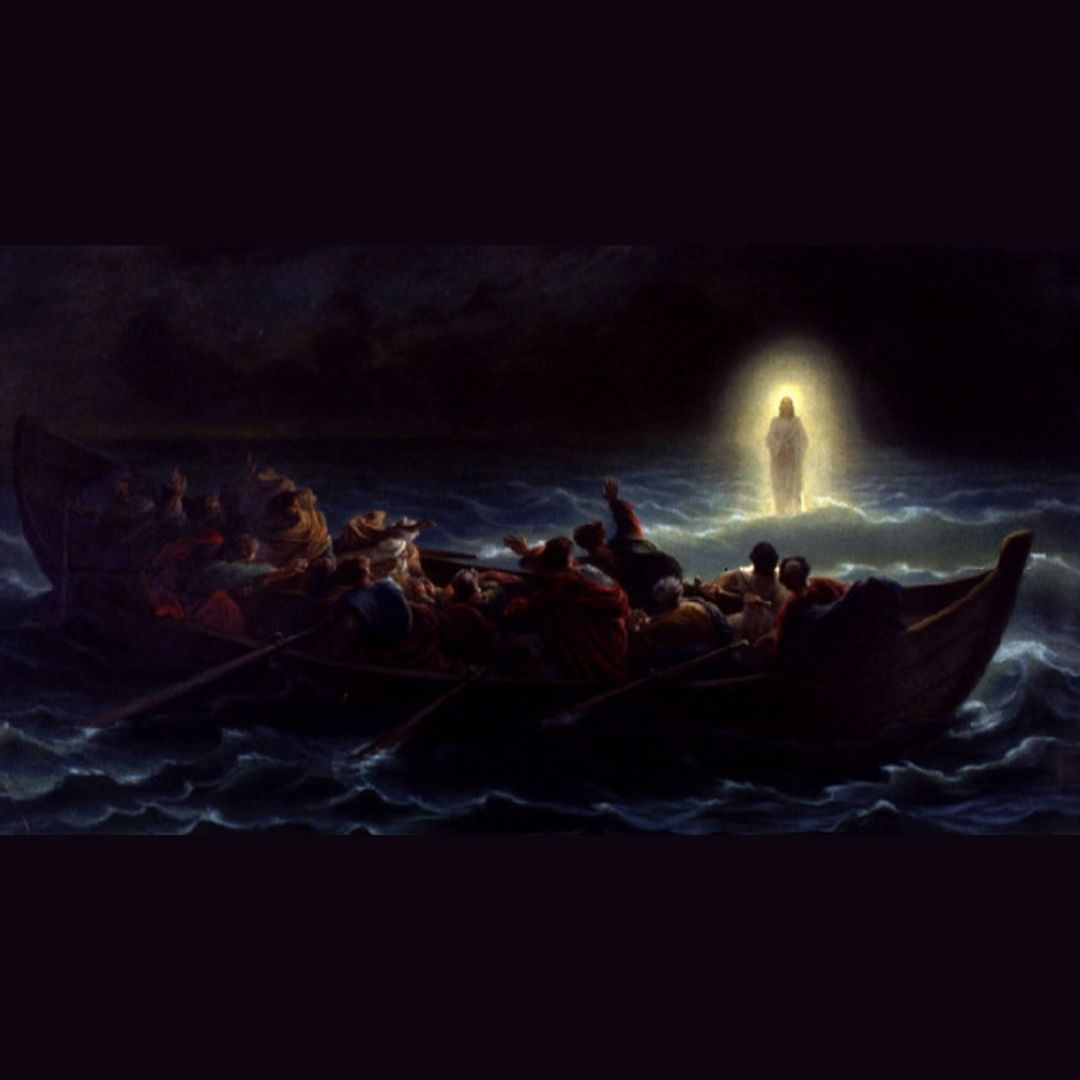
In the Byzantine Church during the first three days of Great and Holy Week, we celebrate a special service known as ‘Bridegroom Matins’ (morning prayer). In some churches, they celebrate this service in anticipation, meaning the night before, making the words of the opening troparion (hymn) even more poignant:
Behold, the Bridegroom is coming in the middle of the night. Blessed is the servant He shall find awake. But the one He shall find neglectful will not be worthy of Him. Beware, therefore, O my soul! Do not fall into a deep slumber, lest you be delivered to death and the door of the kingdom be closed to you. Watch instead and cry out: “Holy, holy, holy are you, O God!”
This hymn references the overarching theme for these beginning days of the Lord’s Passion in our tradition – the parable of the ten virgins from Matthew’s gospel (Chapter 25). These vigilant women that the Bridegroom encountered in the parable were split into two groups – those who brought oil and those who did not. They were equally ascetic and committed – they were all outside the door, awaiting the Bridegroom’s arrival. But some foolishly came without any oil to fill their lamps. This oil is seen as charity, without which their lamp, literally and spiritually, lacks the warmth and light by which the Bridegroom can recognize them – He cannot see them because they remain in the darkness. This oil is not something that can be borrowed from others; it must be sought personally, and through much effort. These ten virgins show us what we need to avoid, but also to what we need to aspire, especially during this holiest of weeks. We need to come to this time of the year, vigilantly awaiting the Bridegroom’s arrival, but not without preparation and anticipation.
One of my favorite hymns, apart from the Bridegroom Troparion, is featured on Great and Holy Wednesday. The particular focus of this day is contrasting the woman who anointed Jesus with ointment at Bethany and Judas, who betrayed Him – one who counted no cost in honoring Jesus and one who sold Him for 30 pieces of silver. A hymn traditionally sung on Holy Wednesday, known as The Hymn of Kassiani, written in the 9th century, speaks of the woman anointing Jesus and connects her with Eve – but instead of hiding in her sin, this woman comes to Jesus in her need, seeking His mercy.
“The woman who had fallen into many sins, O Lord, yet when she perceived Your divinity, she joined the ranks of the Myrrh bearing Women. She offers myrrh with tears for your burial. She cried, “Woe is me! For the stinging night of pleasure seizes me, shrouded in the dark and moonless love of sin. But accept the fountain of my tears, O You Who can scatter the water of the sea into clouds. Bow down Your ear to the sighing of my heart, O You Who bowed the heavens in Your ineffable condescension. Once Eve heard Your footstep in Paradise in the cool of the day, and in fear she hid herself. But I will tenderly embrace those pure feet, and wipe them with the hair of my head. Who can measure the multitude of my sins, or the depth of Your judgments, O Savior of my soul? Do not despise Your servant in Your immeasurable mercy (The Hymn of Kassiani).”
The words and melody of this hymn move me every year, touching something deep in my soul that audaciously wants to mirror this woman’s gift and right the wrong of Eve. This desire is a gift from the Lord Himself, filling my heart with both the remembrance of my own sinfulness as well as His overflowing mercy, as my Bridegroom and Savior.
Connecting both Jesus’ salvific work and the footsteps of God in paradise, several years ago, I also discovered the text of an ancient homily, quoted in the Roman Breviary on Holy Saturday, which in the Byzantine tradition is attributed to St. Epiphanius. This text, which poetically renders the silent action of Jesus in the tomb on Holy Saturday, brings to life the intense battle in Hades, as well as the intense and repentant hope of Adam who awaits Jesus’ salvation from Hades. Read in its’ entirety, the scene of Jesus entering Hades rivals the best action film of our time, in my humble opinion. The chaos of Jesus’ presence sends Hades into a frenzy, with angels fighting battles around Him. But He seems to walk into Hades with a primary purpose – to find and free Adam. And Adam, for his part, seems to be aching to hear those footsteps from which he once fled, in order to repent of his first sin that left us all bereft. He becomes the herald of Jesus to those held captive, and his contrite trust seems to draw Jesus to him. Here is the excerpt that most captures my heart:
As these things, therefore, and more than these were coming to pass, were proclaimed and made known, and all things were in an uproar, and the Master’s presence was about to reach the very bottommost realm of the nethermost regions, then Adam, the first of men to be created, the first-fashioned and first-mortal, who lay in the innermost recesses bound with great security, heard the sound of the Master’s feet as He came to the imprisoned, and he recognized His voice which sounded in the prison as He walked. Thereupon Adam turned towards all his fellow captives from ages past and said, “I hear the sound of Someone’s feet advancing towards us, and if He deigns to come even to this place, we shall be freed of our bonds, nay, if we should but see Him in our midst, we shall be delivered from Hades!” (Homily of St. Epiphanius)
To read these words pierces me. This is the goal of this Great and Holy Week. To listen and wait for our Lord’s coming, the Bridegroom of each of our souls, who seeks to free us from our bonds in our darkest place of need. He stops at nothing to seek us in that deep place. May He give us eyes and ears to seek and hear Him in a new way during the services that make present His Passion to us this week.
Mother Gabriella, Copyright 2025
Mother Gabriella is a stavrophore nun of Christ the Bridegroom Monastery in Burton, Ohio. She joined the monastery in 2011 and made her life profession in 2015. An Ohio native, Mother Gabriella was born, raised and educated in Akron. Prior to entering, she earned a degree in Accounting from The University of Akron and worked for a mid-sized accounting firm, living the dangerous life of senior tax associate. Despite her status as an only child, she enjoys community life, and serves her community in many capacities, but especially as economos (treasurer).
To learn more about Christ the Bridegroom Monastery and Mother Gabriella, please visit https://www.christthebridegroom.org/

Related Posts

Comments (0)