
A number of events had transpired that began the transformation of my heart, and the…
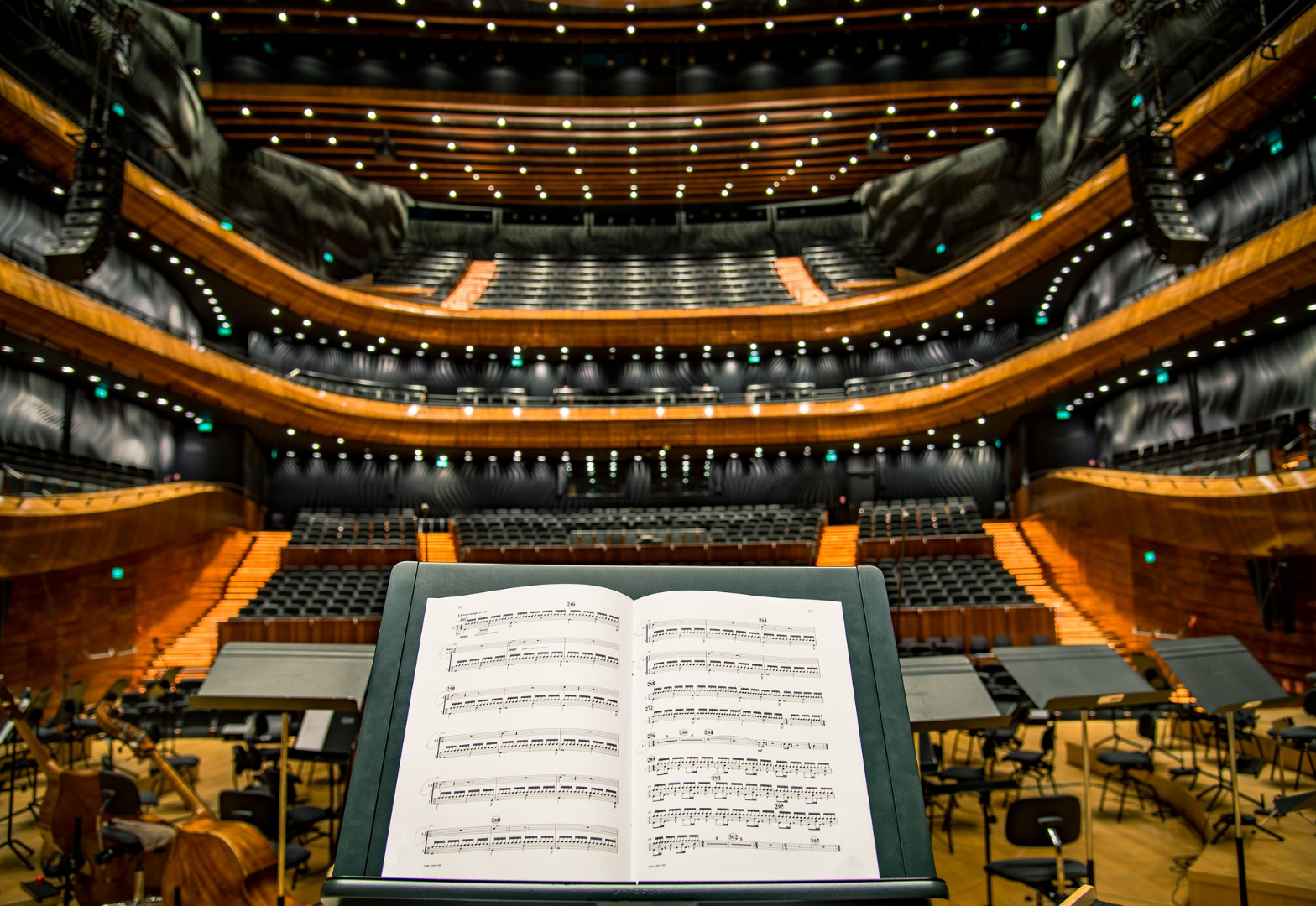
Sempiternam Requiem
Please don’t flee from the title of this essay—I promise, it is not about death. It is about life. Or rather, I should say it is about finding life through death.
I want us to have the courage to live our lives to the full, with the beautiful agony of a heart wide open. To notice and savor the moments in life laden with significance, when we hear a still, small voice whispering: Pay attention. Be present. There is something beautiful happening here.
My life is anchored by these moments when my body tunes into a special frequency, a signal, perhaps from Heaven or perhaps from within, that says: This is important. This is meaningful. Something extraordinary is happening here. This moment will anchor your life.
Three such moments come to mind. I am sure there are more (Shouldn’t all of life be this meaningful?) but sadly, for many years I didn’t know how to tune into that frequency. I didn’t know how to find the channel to teach me to live with my heart wide open. For many, death forces us into that realm, and if we are willing, there are treasures to be found from paying attention in these spiritually thin places.
The sufferings of my life on the Journey of the Beloved brought me to a deeper level of awareness, intimacy, and connection with God that allow me to notice these moments and receive their beauty more easily. They surround us. They are right now sitting on my patio. The glory of the morning. The music of the breeze in the trees. The brilliance of the flowers. The coolness of the wind. The warmth of the sun. The dappled shadows dancing on the patio. The buds yet to bloom on the branch next to me.
Slow down. Pay attention. This is important. Something is happening here.
What if we let ourselves live in the sacrament of this present moment, connected to our body, open to receive what this moment brings? Beauty and ache. Joy and grief. Love and loss. Hope and sorrow. I have found richness and depth in receiving the glory of what is both right now and eternal. Three significant moments come to mind when I experienced the brilliant beauty of the present moment interwoven with the glory of eternity, the intersection of Heaven and earth.
My grandfather died in April, 2017. His role in my life was both anchor and lighthouse. He was the cornerstone of our family. Legendary. Colonel Zim E. Lawhon was a hard-working, well-educated, respected and respectful man. He served in the army in World War II and almost died in the Philippines. He wept after watching Schindler’s List because he had never told anyone what it was like to help liberate some of the camps. I knew from my earliest moments that he deserved great respect. We never left his dinner table without waiting our turn to address him at the head of the table. Papa, may I please be excused?
He valued family and his faith. He taught me to love being Catholic through his silent witness to prayer and the import he gave to matters of faith. He believed in the Church and taught me to love the Church as well. I didn’t want to disappoint him and I wanted him to be proud of me.
His death, while not unexpected, rocked our family with its weight, our stable foundation fractured and unsteady. His funeral was held on April 7th , 2017, the month before I conceived John Paul Raphael. The words to capture the honor, awe, respect, and love that infused that day have long eluded me.
The plot was commonplace. The patriarch dies. The family gathers and mourns. Offers tributes and goodbyes … but the meaning. The weight of it. The day of his funeral was other-worldly. I was transfixed in the present moment while the barriers between Heaven and earth, time and eternity, seemed to fade. The significance pressed into my body and spirit: This is what it means to be alive. This is what it means to live a life.
He lived an epic, meaningful story that seemed to spill onto me after his death. His life convicted me that when I die, I want others to declare that this woman lived. She lived her life. She savored it. She drank deeply of what life had to offer. The sorrows. The joys. The heartaches. The failures.
I want an epic grand love story – not just with my beloved husband or precious children and grandchildren, but with God. With creation. With life.
My grandfather taught me how to do that.
My large family gathered at the funeral home the morning of the funeral, somber in black suits and dresses, some of us wearing small hats with veils. We took turns saying a final goodbye to the man we all loved and mourned. I knelt by his coffin feeling the dissonance of the lifeless body of a man who embodied life. His dress
blues and colored bars proclaimed a life of service and dedication. We would go on, many months later, my body swollen with John Paul Raphael in the womb, to bury him at Arlington National Cemetery. Full military honors. A horse drawn carriage. A final salute of gun-shots and the mournful wail of a lone bugler.
It had been decided that after the viewing, the family would walk behind the hearse to the church, a slow, dignified parade through five quiet, city blocks. The family processed beginning with the grandchildren in descending age order, which meant my older brother and I were in the front of the line, right behind my grandfather in the hearse.
I couldn’t help but smile. My grandfather would have loved this. He loved a parade. He graduated from Princeton in 1940 and went back for the annual Parade year after year. I remember the 40th reunion in 1980 when we all showed up, dozens of us, dressed in orange and tiger stripes. My grandmother had sewn me an
orange sundress and the men wore cream-colored straw hats with an orange band wrapped around the brim. My grandfather wore an orange blazer. We were decked out for Princeton. He was faithful to attending the reunion, even as the living members of his class faded away. He loved liturgy and ritual. He loved regalia and the act of giving honor and reverence where deserved.
We gave him a final parade, my brother and I walking reverently and steadfastly at the helm. My cousins walked behind us followed by my grandmother pushed in a wheelchair by my mother, surrounded by her twelve siblings. We were bound together in a dignified, heart-breaking tribute to a man who lived his life by honor, family, and service. All of creation was caught in these deeply holy and humbling moments, whispering wisdom:
Pay attention. Soak this in. Be alive in this moment. This matters. This is shifting you. This is changing you.
Heaven and earth meet here. Drink deeply of this moment. Be fully alive to everything this moment offers.
Nine months later I again drank deeply of the present moment. I was caught in the web of beauty, grief, and goodness during the twenty-eight hours and ten minutes of our son John Paul Raphael’s life. He died from complications of Trisomy 18 and even the twenty-two hours we spent with him after his death were reverent,
powerful, life-altering moments.
Stay here. Open your heart. Open your eyes. Open your ears. Open your mind. This is important. Something is happening here.
Be in this. Receive this gift. Savor this.
Cherish this. Welcome this. Honor this. Reverence this.
The Lord broke into my world through the gift of my son, love and beauty broken open. Break Forth, O Beauteous Heavenly Light declares the 17th-century German hymn. In recent years, I feel that same breaking in small moments of beauty like the sound of the breeze in the trees. They call my attention, whispering: Be right here. Savor this. Drink from this day. Receive this gift. The gentle glory of Heaven
coming to earth through creation, through relationships, even through death, to touch our hearts with its beauty and heavenly weight, miraculously both light and sweet.
As a teenager, one of the first pieces of music to enter my heart was John Rutter’s Requiem. Written in 1985, I had high school friends that sang in the Philadelphia Boys Choir and performed this work shortly after its composition. They introduced me to its haunting melodies, the reverent text of the prayers of the Church for the dead. I bought the cassette and spent years listening to its achingly beautiful and gloriously sweet music.
As I learned to sing, I cherished the third movement, Pie Jesu, sung by a boy soprano, his glorious high solo cried out in Latin, “Merciful Lord Jesus, Grant them rest. Grant them eternal rest.” I had the privilege of singing this movement of the Requiem once in 2011 at the funeral of a beloved husband, father, and coach who died tragically in our community. I poured my whole heart into the gloriously beautiful text and music of the Pie Jesu as a prayer to honor the life and death of this man.
There was no question when John Paul Raphael died that I wanted Rutter’s Pie Jesu at his funeral. My friends and colleagues from the Master Singers of Virginia came and sang it magnificently. The soprano solo was sung by my friend and fellow soprano, Carolyn Dignan, who offered a moment of musical perfection. After communion as I knelt and listened to them sing, the words and the music cried out to my baby a love and agony that was beyond words. The music prayed for me.
And so, when I began my 27th season singing with the Master Singers this year and our conductor announced we would be performing John Rutter’s Requiem, I wanted that solo. I had never performed the entire work and I prayed with the beauty and tenderness of the piece for months, wanting the solo fiercely.
I was finally ready, eight years after John Paul Raphael’s death, to sing the Pie Jesu myself for my son. I was ready for it to be my tribute to him. I practiced for months, lamenting that as a 54-year old woman, my voice no longer had the boy-soprano quality that it did years ago when the high notes would float from my mouth. Now I had to work hard to vocalize and reach those notes with as pure a tone as possible, to not be the warbling old soprano I feared I was becoming.
I had the piece memorized by the time I auditioned, nervous in a way I am normally not, and celebrated when my conductor chose me. Now, I realized, the hard work began. I had to be able to sing it, to get through it, and to do it justice. For John Paul Raphael.
I prepared as any professional would, singing the piece so often that the music flowed out of me not as a conscious thought process but as muscle memory. I knew the structure. I knew the patterns. I knew the notes and how they fit so completely that when the opening measures of the horns, then the clarinet and flute then
strings began, the music poured out of me as easily as riding a bike.
And I sang. I sang on Saturday, May 2nd to a church full of people, the orchestra, my colleagues and friends, and my husband in the second row crying while I held it together. It was glorious. I did it, but it felt like the dress rehearsal. That church was new to our group and the space still unfamiliar. The next day, we would be
singing in a church where I had performed with the Master Singers dozens and dozens of times over the last 27 years, a sanctuary that felt like home.
I had sung many solos in that church in my 20s, 30s, and 40s. I remember arriving there in September 2017 coming directly from the airport after our pilgrimage to Rome, exhausted and jet-lagged, John Paul Raphael still tucked safely in my belly. We sang Even When He is Silent by Kim Andre Arnesen that year, another piece
that was performed at John Paul Raphael’s funeral. We practiced it while I was pregnant and performed it in that church after my baby’s death, words and music deeply embedded in my journey with love and grief.
I believe in the sun, even when it’s not shining.
I believe in love, even when I feel it not.
I believe in God, even when He is silent.
On Sunday, May 3rd, my family filled an entire pew in that glorious sanctuary, spring sunshine streaming in through the stained-glass windows. Four daughters, four grandchildren, my father and step-mother, an aunt, my mother-in-law, and my dear husband. As I waited downstairs with the other members of the choir for
the concert to begin, I thought I would throw-up. I was uncharacteristically nervous, a heavy weight pressing on my chest. This was important. This mattered to me.
My body knew. Yesterday was a warm-up and today, this second and final performance, I would sing to my baby. I would sing him the Pie Jesu. I would tell him sempiternam requiem — eternal rest, little one.
I was so nervous. I was warmed up. I was ready. I am a professional. I know how to do this, but I was scared. I was scared I would blow it – not that I cared what anyone else thought of my performance — this was about me and my little boy. I wanted to sing to him what I had never been able to sing when we had to let him go.
I had given him permission; I knew I had to. In those terrible, beautiful, heart-breakingly holy moments as he was dying, I kissed him and whispered in his ear, “It’s ok. It’s ok, sweet baby. Go ahead … I will be there soon.”
When it was time for the concert to begin, I processed with the other singers onto the altar in our choral formation. The heavy, dark notes of the first movement began – slow, atonal chords building to a sweet and clear melody. The second movement led with a lengthy lament by solo cello and heavy, haunting complaints
by the altos and basses. When it ended, I prayed silently for grace and strength then stepped out of the choir into my place as the soloist. I held my closed folder at my side and looked peacefully at the conductor. He raised his baton and the French horns began. Then the clarinet and the flute, then the strings.
And I sang. I opened my mouth and I sang to my son. I had been praying through the previous movements, Jesus come. Mary, help me. John Paul Raphael, pray for your momma. I need your strength. I need your grace. I can’t do this. I don’t want to do this and there I was doing it. Singing with every ounce of my heart, my body,
my soul, my spirit, all of my love. All of the love that has nowhere to go when you lose a child.
I made it through the first long glorious phrase, the gentle opening. I made it through the second spectacular phrase, crying out dona eis requiem over and over, rising to the high A-flat that I held purely over the next few measures as the choir came in beneath me, my body entirely in the present moment. I glanced towards my family as the cry in the third phrase repeated: sempiternam requiem, sempiternam requiem louder and more intense, sempiternam requiem the third time forte and the full crescendo of the entire piece. I could feel the tears. I could feel the unraveling and the ache that wanted to pour out of me. I could see tears on my daughter’s face and had to look away so that I didn’t cry. I came to the final, gentle, reverent phrase, the motion of the eighth notes slowing to half notes as I climbed with the final sempiternam requiem to the high A, held soaring and echoing in the sanctuary, a cry of my heart.
Sempiternam requiem, beautiful baby. I will be there soon.
The moments walking behind my grandfather’s casket in silent reverence with my brother and my family. Pay attention.
The vigil of John Paul Raphael’s death, when my heart broke and his heart stopped at 2:43 pm, the intersection of Heaven and earth. Soak this in. Be alive in this moment.
My body held in the sacred moments of music and grief, a pin dropped into the landscape of my life. Sacred, holy moments. Drink deeply. Heaven and earth meet here.
These experiences, though I have tried to put them in words, live beyond them. They are of the spiritual realm, rooted in the present moment, and held in my body. They both anchor me to earth and call me to live connected to all that lies beyond the veil.
Stay here. Open your heart. Open your eyes. Open your ears. This is important.
Something is happening here.
Drink deeply and receive the gift of your life.
Savor. Cherish. Welcome. Honor. Reverence.
This is how I want to be in the world – alive to the joy and the pain. The beautiful agony of a heart wide open, drinking deeply of all the Lord gives us here and now while we await our final rest with all that lies beyond. A courageous, wild, beautiful epic love story with each other, with God, with myself, and with creation. This is
the Journey of the Beloved.
Come with me. Life is waiting for you.

Related Posts

Comments (0)